

Open 7 days a week!
Call us: Petone 04 5669714 | Miramar 04 388 9944
“
Amazing products,
fantastic service
”
Richard Lousley



 An official Weber specialist and proud of it.
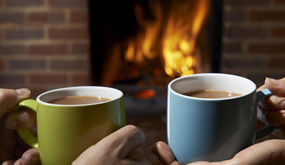
To start with, heat as a source always travels from warm to cold areas, (for example, if you touch a metal railing on a winter's day, it feels cold. This is because your hand is warmer than rail and the energy from your hand is passed through) - until both areas have the same temperature.
The most important mechanical function of a fireplace is to produce a draft. A fireplace creates a pillar of heated gas inside the chimney. As that air rises, more heated air from the fire is dragged after it. The result is a draft, a solid flow of smoke and hot gases, up the chimney.
The draft also serves another purpose. Any fire needs a steady flow of oxygen to keep burning. As the hot gas rises, it pulls fresh air into the pile of burning fuel.
Fireplaces transfer heat in three ways:
Convection: As mentioned before heated air moves around - usually upwards. The smoke of an open fire, for example, is carried upwards by convection currents.
Radiation: Heat is transferred from a warm body to a cold one through radiation. However the air between the bodies isn't warmed up during this process. For example, if you stand in front of a heater, its radiation will warm you although the air around you is still cold.
Conduction: Direct heat transfer through solid materials. For example, a fire iron that's thrust into an open fire will steadily become hot along its whole length due to conduction.
There are two ways to ensure your home is warmer than the outside. You can either reduce heat losses through insulating your ceiling and walls or a fireplace can replace them, using radiation and convection.
Interested in buying a new fireplace make sure you read our previous article on things you need to know before investing or come in and see the team at Wellington BBQs and Fire today.
 Fireplaces: Do your Homework! - 11.03.2013 13:20

 |
|